Paper Crafts Techniques and Ideas for Cards, Stamping, Scrapbooks and More
Step-by-step guides for the craft table: folding a clean card base, inking a stamp evenly, building a scrapbook page that holds together, and getting a die cutting machine to cut on the first pass.
Start with a card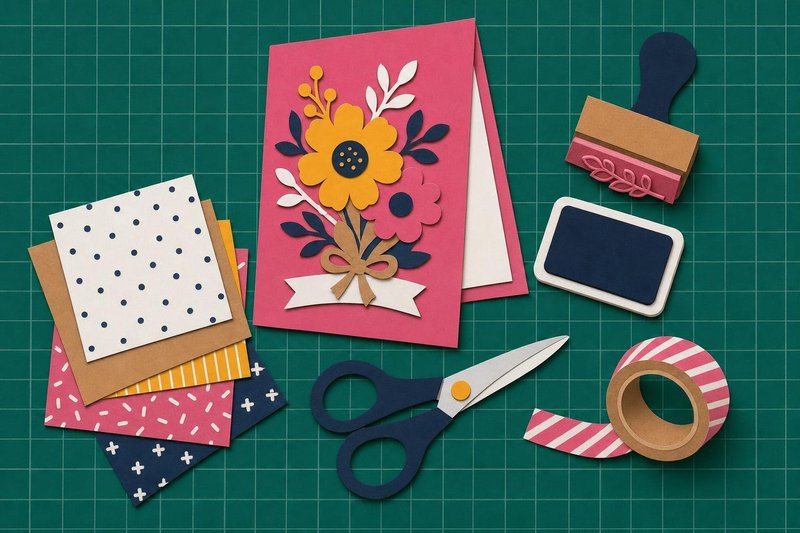
Pick a technique
-
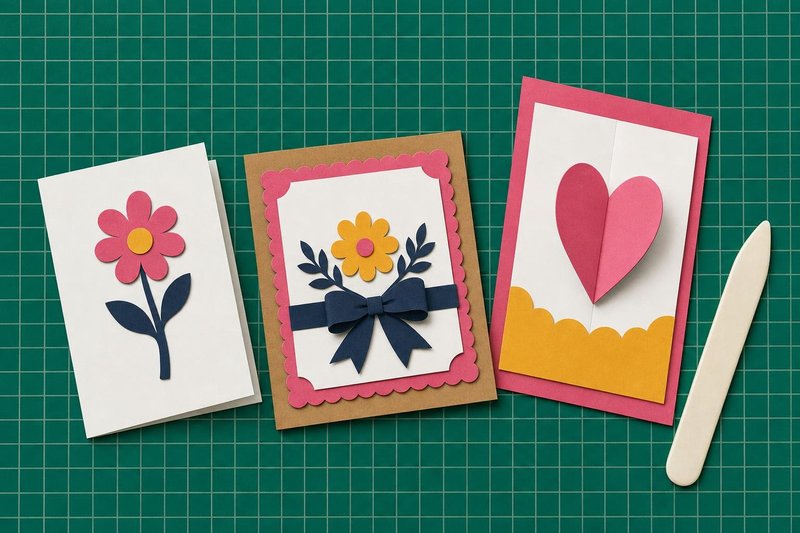 Card Making Techniques and Ideas for Beginners, From the First Fold to Pop-Up Cards
Card bases, scoring, matting and layering, clean and simple design and interactive folds, with the sizes that fit US envelopes.
-
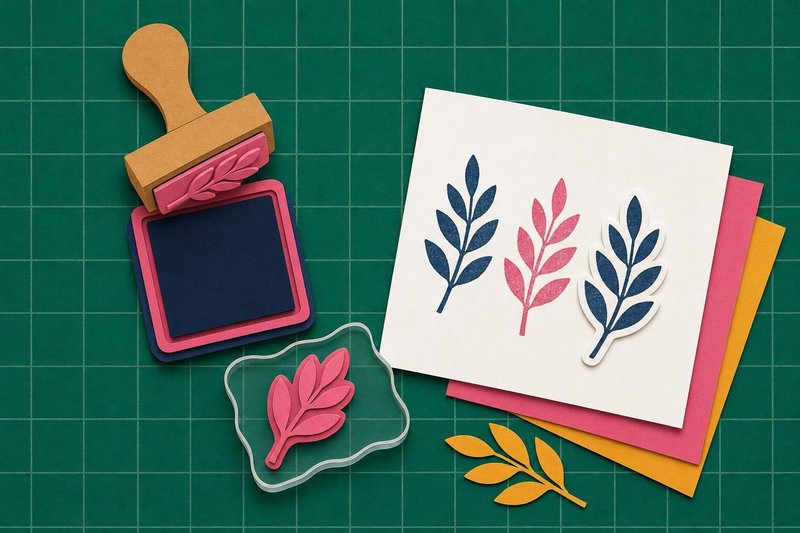 Rubber Stamping for Beginners: Techniques for Crisp Impressions, Inks, Masks and Embossing
Inks, stamp types, embossing, masking and blending: how a stamped image goes from patchy to sharp, and the tools each step needs.
-
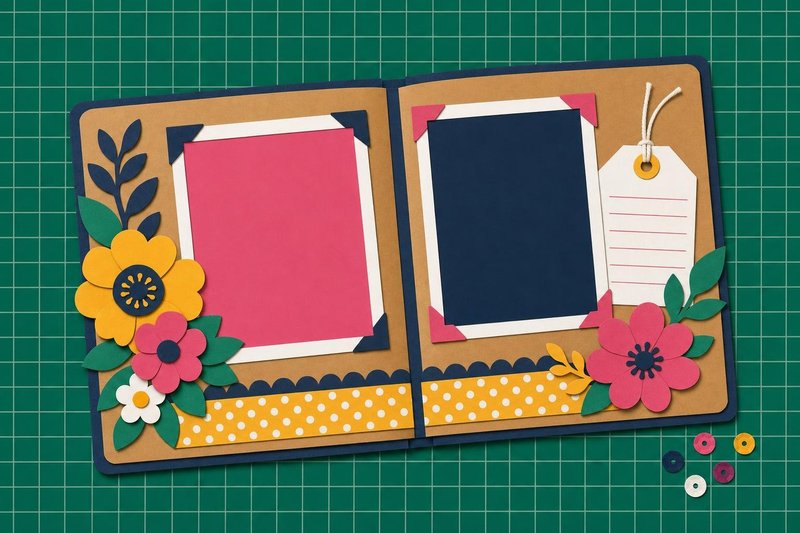 Scrapbooking Ideas for Beginners, With Page Layouts, Journaling and Photo-Safe Albums
Album sizes, page layouts, journaling, pocket pages and mini albums, plus the acid-free supplies that keep prints from yellowing.
-
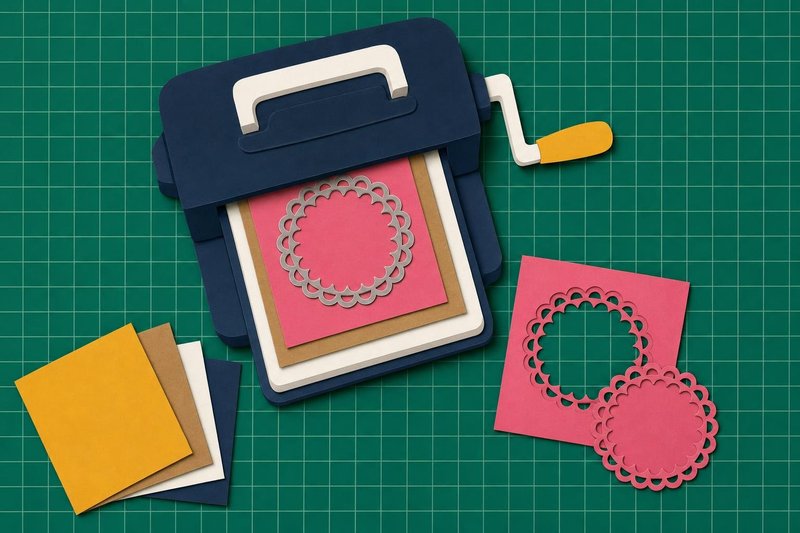 Die Cutting Machines Guide for Beginners, From Manual Rollers to Electronic Cutters
Manual roller machines and electronic cutters side by side, with the plate stacks, folders and fixes that make the first cuts come out clean.
-
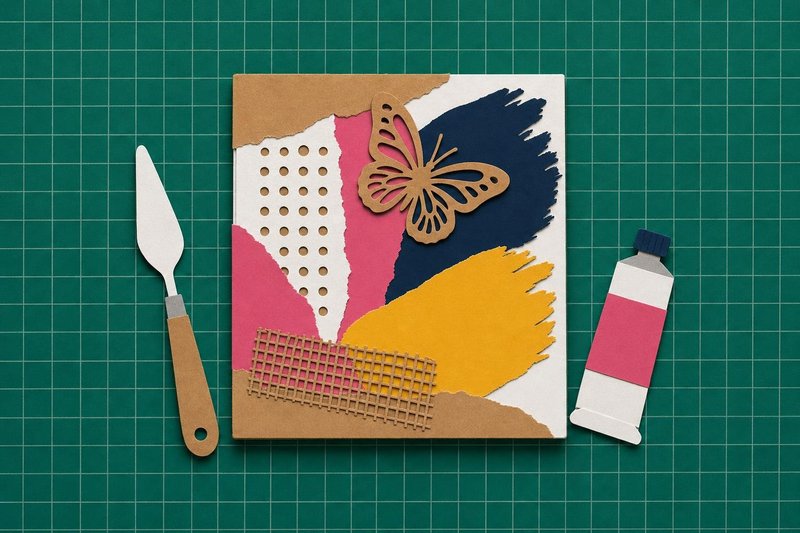 Mixed Media Art Techniques for Beginners, From the Gesso Ground to Distressed Edges
Grounds, texture paste, stencils, collage and aged edges, in the order that keeps a page flat and every layer stuck where it belongs.
-
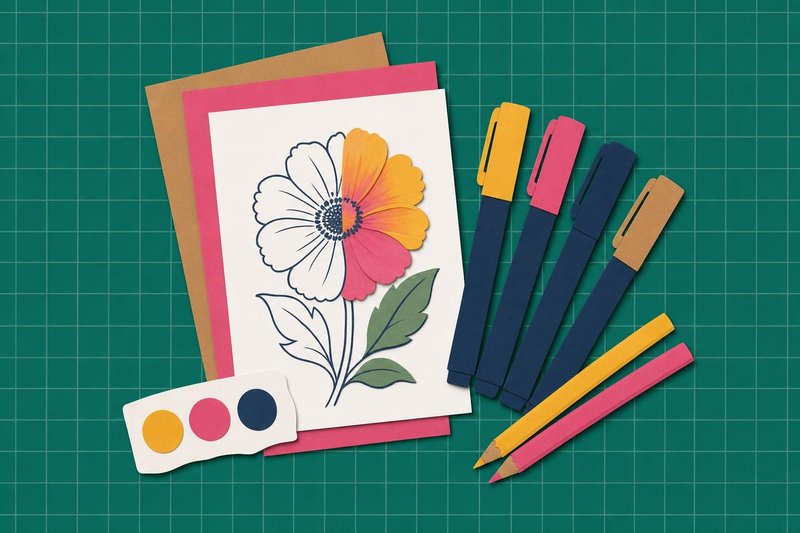 Coloring Stamped Images: Marker, Pencil and Watercolor Techniques
Four ways to color a stamped outline, compared by paper, stamping ink, blending method and how long each one takes to learn.
Paper crafts reward small decisions. A card base scored a sixteenth of an inch off center will never close flat. A stamp pressed with uneven pressure leaves a pale corner, and a scrapbook page built without a plan ends up with the photo pushed into a corner by the embellishments. The paper craft techniques and paper craft ideas on this site are about those decisions: what to cut, in which order, with which tool, and why one approach holds up better than another.
Paper craft techniques worth learning first
Six groups of techniques cover most of what ends up on a craft table. Each has its own section with a pillar guide and shorter how-tos.
- Card making: card bases, matting and layering, clean and simple layouts, interactive folds.
- Rubber stamping: inks, clear and cling stamps, masking, heat embossing.
- Scrapbooking: page layouts, photo mats, journaling, albums that age well.
- Die cutting machines: manual and electronic machines, cutting plates, shims and file-based cutting.
- Mixed media: gesso, texture paste, stencils, layered collage on paper and canvas.
- Coloring: alcohol markers, water-based markers and pencils on stamped images.
The order is not arbitrary. Most paper craft techniques build on card making, because a card is small, cheap and quick to finish. Stamping, die cutting and coloring all end up on a card front sooner or later, so it is the natural place to practice them.
Paper craft ideas that start with one sheet
Plenty of paper craft ideas need nothing more than an 8.5 x 11 inch sheet of cardstock. Cut it in half across the long side and each half folds into a standard A2 card (4.25 x 5.5 inches) that fits an A2 envelope. From there:
- A one-layer card with a single stamped greeting, placed slightly above center.
- A matted card, where a patterned panel sits on a contrasting mat 1/8 inch larger on every side.
- A shaker card, with sequins sealed behind an acetate window and foam tape.
- A gatefold, where both side panels fold in to meet in the middle.
Each of those is covered step by step in the card making section. The same thinking scales up: a scrapbook page is a larger card front with photographs, and a mixed media canvas is a card front with paint instead of patterned paper.
Tools, in the order they earn their place
A useful starting kit is shorter than craft-store aisles suggest. A paper trimmer with a scoring blade, a bone folder, a self-healing cutting mat, a metal ruler, a craft knife, sharp scissors, a tape runner and a bottle of liquid glue will handle most paper crafts for months. Add a black dye ink pad, a clear acrylic block and one stamp set when stamping becomes interesting. A die cutting machine comes later, once you notice you are cutting the same shape by hand for the fourth time.
The cutting mat deserves a word. A self-healing mat closes small knife cuts as you work, protects the table, and its printed grid is an honest ruler for squaring panels. Replace it when the blade starts to follow old grooves.
How the guides are built
Every guide lists what goes on the table before the first step, gives measurements in inches (the sizes US papers and envelopes come in), and says where a technique tends to go wrong. Where two methods compete, such as tape runner against liquid glue or dye ink against pigment ink, the guide says which one to use for which job instead of listing both and leaving it open.
There are a few limits, as with any writing about paper crafts. Brand-specific settings for electronic cutters change with every software update, so those guides describe what to test rather than quoting numbers that will be out of date by next season.
Questions crafters ask
Which paper craft should a complete beginner start with?
Card making. A card uses one sheet of cardstock, a few layers of patterned paper and an adhesive, so a first project is finished in an evening and every later technique, from stamping to die cutting, can be practiced on the next card.
What weight of cardstock works for most paper crafts?
For card bases, 80 to 110 lb cover stock (about 216 to 300 gsm) folds cleanly and stands up on a shelf. Layers and die cuts work in 65 to 80 lb, and scrapbook pages usually use 12 x 12 inch sheets in a similar weight.
Do I need a die cutting machine to make good cards?
No. Scissors, a craft knife, a metal ruler and a self-healing cutting mat cover most shapes. A machine pays off once you cut the same shape repeatedly or want intricate edges such as lace circles and lettering.
How do I keep stamped images from smudging?
Let dye ink dry for a minute and pigment ink for several minutes, or set pigment ink with a heat tool. Smooth, coated cardstock gives the sharpest impression; textured stock breaks up fine lines.
New on the cutting mat
- Clean and Simple Cards: White Space, One Focal Point, Rule of Thirds
- Scrapbook Mini Albums: Bindings, Chipboard, Envelope, Paper-Bag Books
- Distressing Paper: Inking Edges, Sanding, Crumpling, Tearing, Aging
- Art Journaling With Mixed Media: Journals, Page Prep and Layering
- Scrapbook Page Layouts: Grids, Photo Counts and Balance on 12 x 12
- Pop-Up Cards: Box Pop-Ups, V-Folds and Layered Scenes That Close Flat
- Die Cutting Problems and Fixes: Incomplete Cuts and Stuck Pieces
- Altered Art Projects: Prepping and Decorating Books, Tins and Boxes
- Stenciling With Paste, Blended Ink and Spray, Plus Clean Registration
- Ink Blending for Stamped Cards: Tools, Smooth Gradients and Stencils
- Scrapbook Journaling Ideas: What to Write and Where to Put It
- Fun Fold Cards: Sizes and Score Lines for Gatefold, Easel and Z-Fold